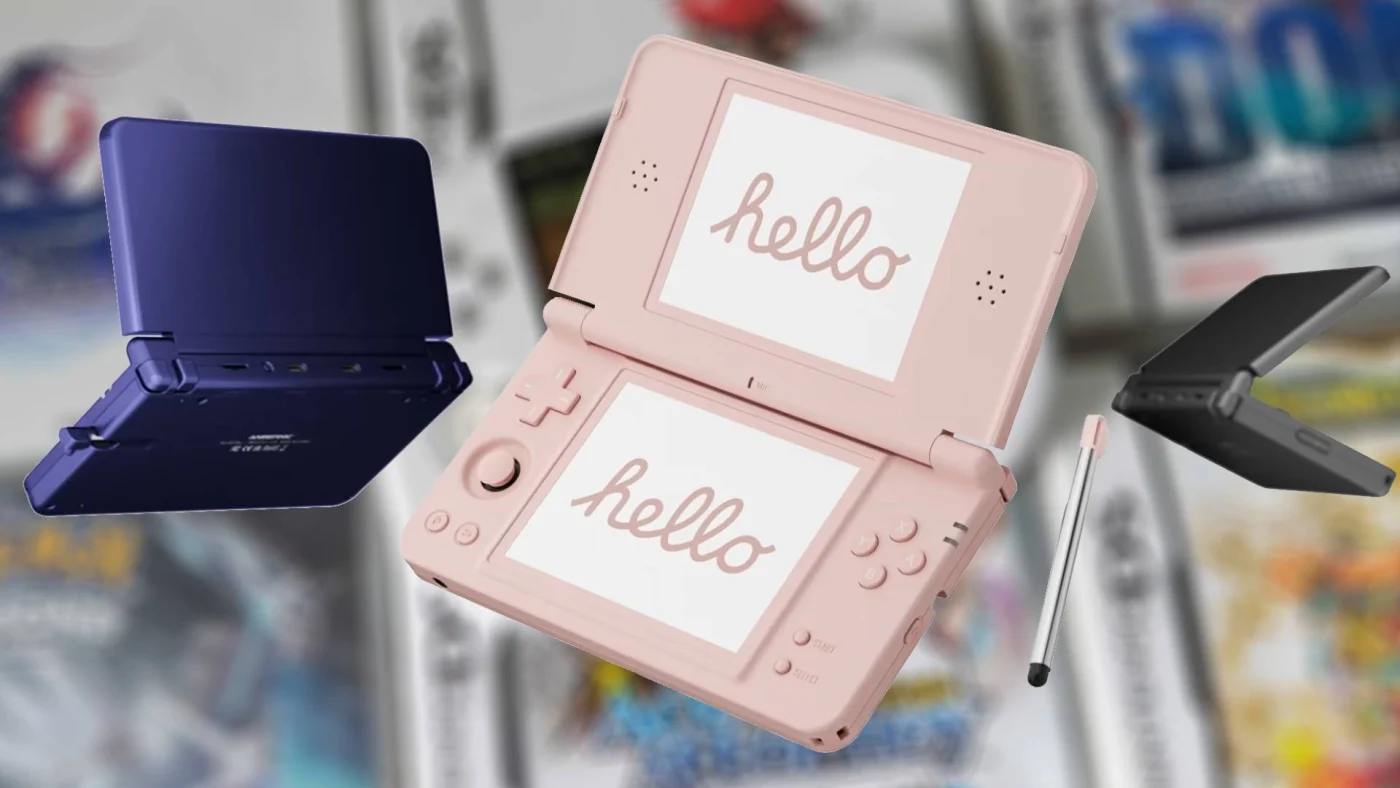
Anbernic's newest handheld, the RG DS Plus, is easy to underestimate based on the name alone. What it actually represents is a notable shift in how retro handheld manufacturers are approaching hardware design.
The device features dual 4.3-inch displays, each running at 1024×768 resolution — a spec choice that enables clean 4x integer-style scaling specifically for Nintendo DS content, avoiding the blur or distortion that comes with non-integer scaling on generic displays. It also includes an integrated capacitive stylus with a dedicated storage slot, a microphone built into the hinge, and a newly developed dual-screen emulator called NNDDSS that runs within Anbernic's own Linux-based software environment.
Pricing and full technical specifications haven't been officially confirmed yet through reliable sources, so any numbers circulating online should be treated as unverified for now.
The more interesting story here isn't the spec sheet — it's what the spec sheet represents. For years, retro handhelds have largely followed a "do everything reasonably well" template: one screen, broad emulator compatibility, marketed as an all-purpose retro machine. The RG DS Plus is part of a smaller but growing category of devices built with one specific original system in mind, optimizing hardware choices around what that one system actually needs rather than general compatibility.
Early community reaction has been mixed, with some skepticism about whether performance will hold up given the increased screen resolution compared to previous models. That's currently sentiment rather than a confirmed issue, and worth watching as more hands-on impressions arrive.